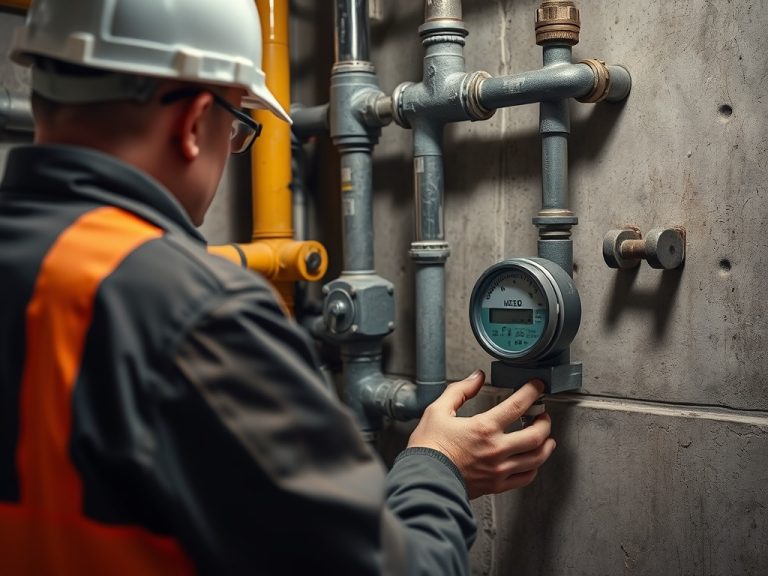
Small facilities can adopt predictive maintenance by starting with low-cost condition checks, simple trend tracking, and targeted tools for critical assets. The best first step is not a complex platform; it is choosing which failures would hurt operations and which measurements can warn the team early.
TL;DR: Start PdM with critical assets, not gadgets. Use inspections, meter trends, infrared checks, vibration screening, ultrasonic listening, oil analysis, and a simple CMMS or spreadsheet only where they support decisions.
Predictive maintenance should answer a risk question
Predictive maintenance, often shortened to PdM, uses asset condition to guide maintenance action. In a small facility, that might mean checking motor vibration, scanning electrical connections with infrared, trending energy or water use, listening for compressed air leaks, or sending oil samples for analysis. The goal is to catch deterioration before it becomes a surprise failure.
The Department of Energy’s O&M Best Practices Guide describes operational efficiency as a mix of preventive, predictive, and reliability-centered maintenance technologies, supported by tracking and management capabilities. That does not mean every facility needs every tool. It means the maintenance method should fit the asset and risk.
A small facility should begin with this question: what failure would disrupt safety, service, revenue, comfort, or compliance? The answer may be a rooftop unit, pump, compressor, electrical panel, elevator, boiler, freezer, server room cooling unit, or water supply component. Focus there first.
Low-cost PdM options by asset type
| Tool or habit | Useful for | Why it can fit a small facility |
|---|---|---|
| Visual inspection route | Belts, leaks, corrosion, blocked vents, loose hardware | Low cost and easy to train |
| Meter trend review | Water, gas, electricity, runtime, temperature | Uses data the facility may already have |
| Infrared scan | Electrical connections, motors, bearings, insulation gaps | Can be periodic and outsourced if needed |
| Vibration screening | Motors, pumps, fans, bearings | Helps flag changes before severe failure |
| Ultrasonic listening | Compressed air leaks, steam traps, some bearing issues | Targets energy waste and hidden leaks |
| Oil analysis | Gearboxes, engines, hydraulic systems | Lab service can reduce need for in-house equipment |
| Simple CMMS or tracker | Work orders, assets, readings, photos | Keeps trends from living in someone’s notebook |
This table is not a ranking. The best tool depends on failure consequence, asset type, staff skill, and whether the organization will act on the findings.
Start with asset criticality
PdM becomes expensive when teams monitor everything with no clear purpose. Start by ranking assets into critical, important, and low-risk groups. Critical assets deserve condition checks because failure would interrupt operations, damage property, create safety concerns, or affect customers. Low-risk assets may only need routine preventive maintenance.
A facility dealing with recurring finish failures, such as tile cracking and grout failure, may not need advanced sensors for that issue. It may need inspection routes, moisture checks, and better repair documentation. Predictive thinking is not limited to machines; it is the habit of looking for early warning signs.
Use standards as guidance, not as shopping lists
ISO’s 17359 condition monitoring standard gives general procedures for setting up condition monitoring programs for machines. Small facilities do not need to turn the standard into a burdensome paperwork exercise, but they can borrow the core logic: define the asset, choose measurable condition indicators, set collection intervals, evaluate trends, and act when limits are reached.
NIST research on condition monitoring-based technologies notes that adopting these technologies requires evaluating engineering and financial benefits to decide whether investment is justified. For a small facility, that is the key discipline. Do not buy a monitoring device unless someone can interpret the data and authorize the follow-up work.
Build a simple PdM workflow
A practical workflow can be simple:
- Pick five to ten critical assets.
- Define the failure modes that matter most.
- Choose one or two condition indicators for each asset.
- Assign collection frequency and owner.
- Record readings in one place.
- Set alert thresholds or review triggers.
- Create work orders when readings change.
- Review outcomes monthly.
This workflow is useful even if the first tool is a clipboard. Once the habit is stable, the facility can decide whether digital sensors, outsourced testing, or software integration would add value.
Affordable tools that often pay attention to the right things
Infrared thermography can identify abnormal heat patterns in electrical and mechanical components, but it requires training and safe access. Small facilities may outsource annual or semiannual scans rather than buy equipment immediately. Vibration screening can help track fans, pumps, and motors, but it works best when readings are taken consistently at the same points. Ultrasonic tools can help find compressed air leaks or steam trap issues, but the team must have a repair path.
Meter trend reviews are often overlooked. Unusual water use can point to leaks. Runtime increases can signal controls or equipment issues. Temperature drift can indicate performance problems. Facilities already working on ductwork inspection and sealing may use temperature complaints, filter pressure, or runtime trends to decide where to inspect first.

: Small facilities team reviewing blurred trend charts beside mechanical equipment, no readable screens or logos.[/B]
Avoid overspending traps
The most common overspending trap is buying sensors before defining decisions. Data without action only adds noise. Another trap is monitoring assets that are cheap, noncritical, or easy to replace while ignoring assets that can shut down operations. A third is skipping training. A tool in untrained hands can create false confidence.
Avoid platform-heavy programs if the team is not yet closing work orders reliably. A simple tracker used consistently is better than a complex system that no one updates. If the facility has only one maintenance technician, design the program around that reality. Outsource specialized readings and keep internal routines manageable.
PdM starter checklist
Use this checklist before buying equipment:
- Which assets are most critical?
- What failures are you trying to predict?
- Which condition indicator gives an early warning?
- Who will collect the reading?
- Who will interpret it?
- What threshold triggers action?
- Is there budget and authority to repair the issue?
- How will results be reviewed and improved?
This article is for informational and educational purposes only. It does not constitute engineering, safety, financial, procurement, legal, compliance, or project management advice. Predictive maintenance programs should be adapted to equipment type, manufacturer guidance, jurisdiction, and qualified professional input.
Build a small PdM habit before buying big systems
Predictive maintenance works for small facilities when it is focused, repeatable, and tied to action. Start with critical assets, choose simple measurements, and prove that the team can respond to findings. A practical first move is to create a one-page PdM route for the five assets most likely to disrupt operations.