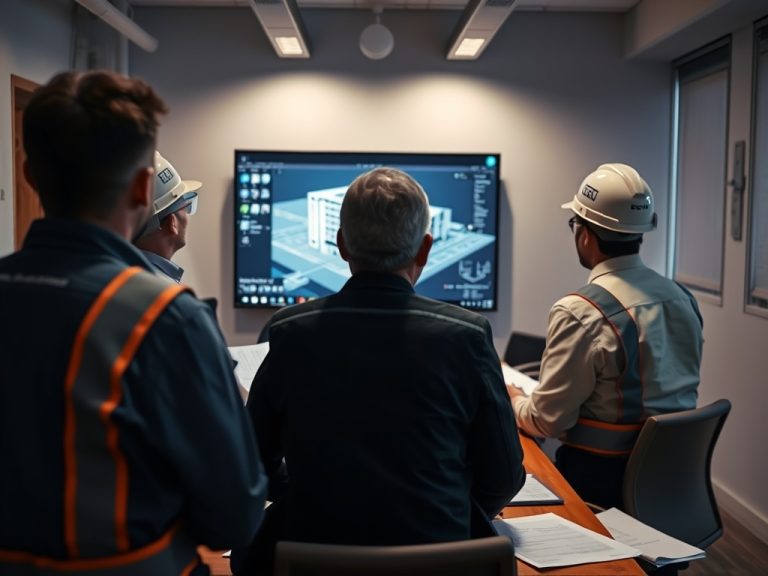
A strong field leadership path turns a good technician into a prepared supervisor through staged responsibility, coaching, safety leadership, planning practice, and clear promotion criteria. The goal is not to reward technical skill alone; it is to teach someone how to get reliable work done through other people.
TL;DR: Build the path in steps: identify candidates early, give them small leadership assignments, train communication and planning, measure behavior as well as production, and support the first supervisory role with mentoring.
The promotion is a role change, not a bigger tool belt
Many companies promote their best technician and then hope leadership will appear on its own. That is risky. The new supervisor must still understand the work, but the job now includes planning, explaining, coaching, documenting, resolving conflict, coordinating with other trades, and protecting safety when pressure builds.
CPWR’s Foundations for Safety Leadership program is built around the idea that foremen, supervisors, and front-line leaders need specific leadership skills to strengthen jobsite safety climate. That point translates well beyond safety. A technician may know how to install, repair, or troubleshoot, but supervision requires turning that knowledge into repeatable crew performance.
A field leadership path should make that transition visible. Instead of a sudden promotion, use a ladder: senior technician, task lead, small crew lead, acting supervisor, then supervisor. Each step should have a purpose and a feedback loop. This keeps the candidate from being surprised by the human side of the job and keeps the company from confusing confidence with readiness.
Define the ladder before choosing people
| Stage | Main responsibility | Readiness signal |
|---|---|---|
| Senior technician | Set quality examples and mentor informally | Others ask for help and follow their work habits |
| Task lead | Run one defined work package or shift activity | Communicates scope, constraints, and closeout needs clearly |
| Crew lead | Coordinate several people for a short duration | Balances productivity, safety, and documentation |
| Acting supervisor | Cover a limited supervisory window | Handles planning, conflict, and client updates with support |
| Supervisor | Own field execution for assigned scope | Produces consistent results through the team |
The ladder should connect to real work. For example, a technician helping with construction sequencing around active operations can practice planning around occupants, access limits, shutdown windows, and communication. That type of assignment exposes leadership habits faster than a classroom alone.
Choose candidates with the right signals
Technical excellence matters, but it is not the whole profile. A future supervisor should also show steadiness under pressure, willingness to teach, respect for procedures, curiosity about planning, and the ability to admit uncertainty. Watch how the person handles rework, schedule pressure, newer employees, and instructions they disagree with.
Good candidate signals include:
- They explain the reason behind a task, not only the steps.
- They raise constraints early instead of hiding them.
- They keep tools, materials, and documentation organized.
- They ask for clarification before improvising on critical work.
- They correct unsafe behavior without turning it into a personal fight.
- They can receive feedback without becoming defensive.
Avoid promoting someone only because they are fast, loud, available, or hard to replace in the field. A rushed promotion may solve today’s staffing problem while creating a longer-term retention, safety, or quality issue.
Teach the skills supervisors actually use
The training plan should match the daily reality of field leadership. OSHA’s Recommended Practices for Safety and Health Programs in Construction emphasizes management leadership, worker participation, hazard identification, prevention, training, communication, and program improvement. Those ideas are useful anchors for supervisor development because they turn safety into daily leadership behavior.
A practical curriculum should include:
- Planning and look-ahead thinking: reading drawings, identifying constraints, sequencing work, and requesting materials early.
- Communication: giving morning instructions, confirming understanding, documenting decisions, and escalating issues with facts.
- Safety leadership: recognizing hazards, stopping work appropriately, and involving the crew in controls.
- Quality control: using checklists, mockups, inspection points, and photo documentation.
- People management: coaching, conflict resolution, attendance conversations, and fair task assignment.
- Commercial awareness: understanding how rework, missed inspections, waiting time, and unclear scope affect the project.
These skills can be taught in short modules, but they become real only when paired with job assignments. After each assignment, ask what went well, what surprised the candidate, and what they would do differently next time.
Use mentoring without making it vague
Mentoring works best when it has structure. Pair each candidate with a supervisor who models the habits the company wants replicated. Give both people a simple agenda: one planning conversation per week, one field observation, one feedback note, and one skill focus for the next assignment.
A mentor should not simply rescue the candidate. The point is to let the future supervisor make controlled decisions, then review outcomes. For instance, let the candidate lead a short coordination huddle, prepare a material request, or close out a punch item area. When the company also uses digital layouts or model-based coordination, exposure to 3D coordination that reduces clashes helps the candidate understand how decisions made before installation shape field productivity.

: Supervisor and trainee walking a jobsite corridor with tablets and PPE, photographed from behind, no readable screens.[/B]
Measure behavior, not just output
A leadership path needs objective checkpoints. Production matters, but a candidate who hits output targets by skipping documentation or intimidating others is not ready. Evaluation should include crew feedback, safety behavior, planning quality, quality outcomes, and communication reliability.
Useful promotion evidence includes completed task plans, documented hazard controls, clean handoffs, resolved constraints, inspection readiness, and examples of coaching. This evidence should be reviewed before promotion, not after a problem appears.
The BLS profile for construction managers notes that construction managers spend significant time onsite monitoring activities and making decisions. Even when a field supervisor is not a construction manager, the same pattern applies: the job requires judgment in changing field conditions. A development path should prepare people for that decision-making environment.
Common gaps to close early
New supervisors often struggle with delegation. They keep doing the hardest task themselves because it feels faster than teaching. That slows crew development and keeps the supervisor buried in tools. They may also avoid difficult conversations until small issues become crew resentment.
Another gap is documentation. Technicians may see paperwork as separate from real work. Supervisors need to understand that daily reports, photos, time records, material requests, and inspection notes protect the crew and the company. Documentation is not bureaucracy when it prevents confusion.
Field leadership readiness checklist
Before promoting a technician, confirm that the person can:
- Lead a daily huddle with clear scope, hazards, and priorities.
- Read the short-term schedule and identify blockers.
- Explain quality expectations to another worker.
- Escalate a field conflict with facts, not emotion.
- Document completed work and open issues.
- Balance safety, production, and client impact.
- Accept coaching from a mentor.
- Train someone else without taking over the task.
This article is for educational purposes only and does not constitute professional engineering, legal, human resources, compliance, or project management advice. Employment laws, licensing rules, safety requirements, and role definitions vary by location and employer.
Turn promotion into a prepared handoff
A strong technician can become a strong supervisor, but only if the company treats leadership as a craft. Define the path, give candidates real practice, coach them through mistakes, and promote only when the behavior is visible. The best next move is to map your current field roles and identify one small leadership assignment for each promising technician.