Remote vs Hybrid vs In-Office Work: What the Data Suggests
Remote, hybrid, and in-office models each solve different business problems, so the best choice depends on role requirements, collaboration patterns, talent access, customer needs, and management capability.
The data does not point to one universal winner. It shows that work model choices are structural business decisions, not perks to copy from another company. The right model should match how work gets done and how performance is managed.
Work Model Comparison Takeaways
- Use role requirements before company-wide preference polls.
- Separate collaboration needs from habit or executive comfort.
- Measure outcomes such as productivity, retention, customer service, innovation speed, and coordination cost.
- Hybrid models need explicit norms or they become accidental schedules.
What the data can and cannot tell leaders
Official labor data can show how much work is being done from home and which occupations or industries differ. The U.S. Bureau of Labor Statistics telework data is useful because it tracks telework through labor-force questions rather than workplace anecdotes. Research groups such as WFH Research add survey-based visibility into employee and employer patterns.
Those sources still cannot choose a policy for one company. A software team, field service company, medical practice, manufacturer, agency, and retail operation have different constraints. Leaders should treat external data as context, then make internal decisions with role-level evidence.
Compare models by business trade-off
| Model | Often works best when | Common risk |
|---|---|---|
| Remote | Work is largely digital, outputs are measurable, and talent access matters | Weak onboarding, isolation, or slower informal learning |
| Hybrid | Teams need both focus time and periodic collaboration | Unclear office days create coordination waste |
| In-office | Work depends on physical assets, rapid apprenticeship, security, or customer presence | Commute burden and narrower talent pool may affect retention |
This comparison is an interpretation of common trade-offs, not a claim that every company experiences them the same way. A remote team with strong management may outperform an in-office team with unclear priorities. A hybrid policy with no norms may frustrate everyone.
[Image Placeholder 1: A workplace operations board comparing remote, hybrid, and in-office planning notes without readable text.]
Remote work requires sharper management systems
Remote work tends to expose unclear management. If outcomes, ownership, communication channels, and response expectations are vague, distance makes the ambiguity louder. A remote model should define how work is assigned, how decisions are documented, how new employees learn, and when synchronous time is required.
Remote can support talent access and focused work, but it needs intentional culture. Managers should watch for uneven visibility, delayed feedback, isolation, and weaker informal mentoring. These risks are manageable, but they are not solved by software alone.
Hybrid work needs rules, not vibes
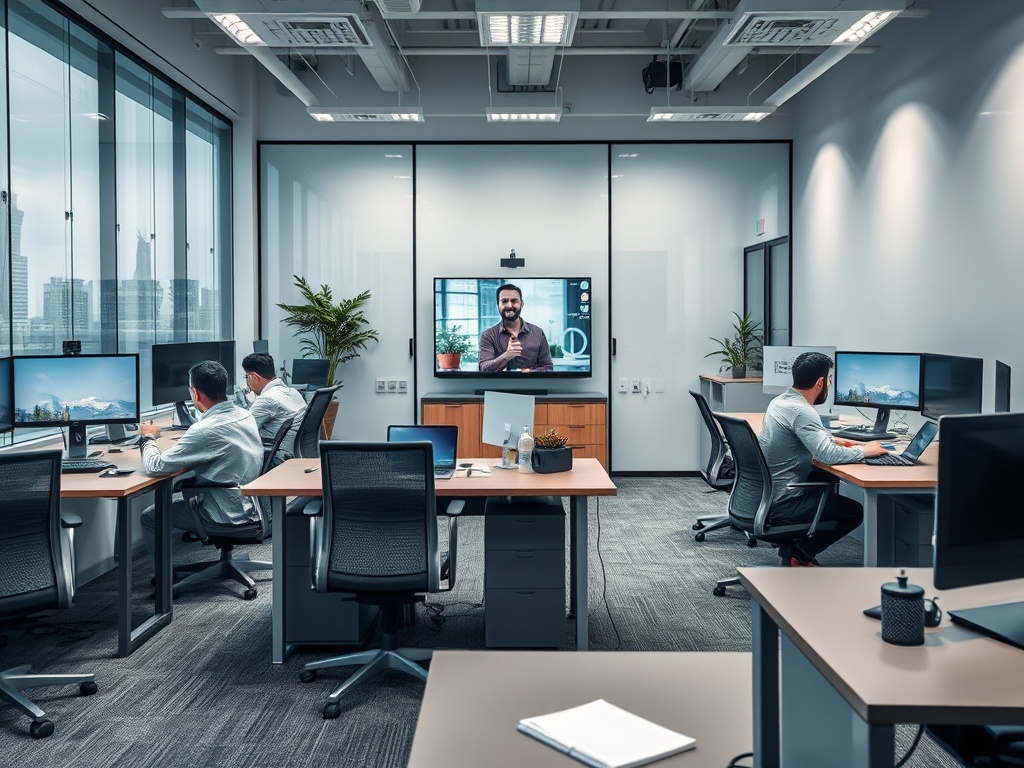
Hybrid is often attractive because it appears to balance flexibility and collaboration. The problem is that hybrid without rules can create the worst parts of both models. Employees commute to sit on video calls. Teams choose different office days. Managers reward face time informally while policy promises flexibility.
A better hybrid model defines collaboration days, focus days, meeting norms, desk usage, manager expectations, and exceptions. It should also specify which work is better in person: onboarding, complex problem solving, relationship repair, performance conversations, planning sessions, or customer workshops.
In-office work can be strategic, not nostalgic
Leaders should also review equity effects. A policy that helps parents, caregivers, early-career employees, disabled employees, field teams, and managers differently can create uneven outcomes. That does not make the policy wrong, but it means the company should inspect promotion access, meeting inclusion, onboarding quality, and workload distribution after the model changes.
Some work is simply better or required on site. Equipment, secure information, customer interaction, apprenticeship, and immediate coordination can justify in-office expectations. The stronger argument is not tradition. It is work design. If leaders cannot name what improves in person, employees may read the policy as control rather than strategy.
Work model decisions also affect resilience. An organization that requires all work in one place may face continuity risks during travel disruption, weather events, health concerns, or infrastructure problems. Those risks connect to Incident Communication Templates for Customers, Staff, and Partners when operations shift unexpectedly.
Build a role-based decision framework
Instead of choosing one label first, score roles by customer proximity, need for physical tools, confidentiality, collaboration intensity, learning needs, output measurability, talent availability, and employee constraints. Then define the policy by role family. Some teams may need full-site presence. Others may need scheduled collaboration. Others may work remotely with quarterly in-person planning.
The policy should also reflect sustainability and cost. Office use, commuting, travel, energy consumption, and real estate footprint can all affect the broader business case. Leaders evaluating those effects can connect work model choices with How to Measure the Business Impact of Sustainability Initiatives.
Turn the policy into an experiment with guardrails
The review should include qualitative feedback from managers and employees, but final decisions should not rely only on preference. Compare the feedback with customer service outcomes, project cycle time, hiring data, retention themes, facility costs, and missed handoffs.
A practical next step is to run a 90-day role-based work model review. Define the outcomes, set team norms, measure customer and employee effects, and review evidence before making the policy permanent. The goal is not to chase a trend. It is to choose the model that lets the business perform responsibly.