
How to Eat Comfortably With Braces the First Few Weeks
Eating with new braces is usually most uncomfortable in the first several days, then gradually becomes easier as your lips, cheeks, teeth, and chewing pattern adapt. The best approach is a short-term plan: softer foods, smaller bites, a few simple tools, and a clear sense of when soreness is normal versus when something needs an orthodontic adjustment.
Early braces comfort plan
- Expect the first 3 to 7 days to feel different, especially when biting into firmer foods.
- Choose soft, easy-to-chew meals, cut food small, and chew slowly.
- Keep orthodontic wax, a soft toothbrush, and pain-relief strategies approved by your clinician on hand.
- Avoid hard, sticky, crunchy, or tear-with-your-front-teeth foods early on.
- Call the office if a wire is poking, a bracket breaks, or pain is severe, one-sided, or getting worse instead of better.
What the first few days usually feel like
Braces move teeth by applying pressure. That does not usually create constant sharp pain, but it often causes soreness when you bite or chew. The ADA's braces overview explains that braces and other orthodontic appliances are used to correct bite and alignment problems, and that diet choices matter during treatment.
A lot of patients make the first week harder by trying to eat exactly as they did before. Comfort improves faster when you temporarily change texture, portion size, and pace.
A simple step-by-step eating plan
Days 1 to 3: reduce the chewing work
Pick foods that need very little pressure. Good early choices often include yogurt, eggs, oatmeal, soup that is not too hot, soft pasta, rice, mashed potatoes, smoothies eaten with a spoon, soft fish, tofu, bananas, cottage cheese, and tender cooked vegetables.
Take small bites and place food toward the back teeth rather than biting into it with the front teeth.
Days 4 to 7: add gentle texture
As soreness eases, you can begin adding foods that are still soft but more substantial, such as shredded chicken, meatballs, pancakes, soft sandwiches cut small, soft fruit without tough skins, and cooked grains.
Weeks 2 to 3: test comfort, not toughness
By now, many patients can eat a wider range, but the rule is still the same: do not challenge the hardware. The ADA's eating guidance is useful here because it connects dental comfort with smart food choices instead of a rigid “allowed list.”
Helpful tools and prep
- Orthodontic wax: Useful when a bracket or wire is rubbing the cheek.
- Soft-bristled toothbrush and interdental tools: Food gets trapped around brackets more easily.
- Reusable water bottle: Rinsing after meals can make the mouth feel cleaner between full brushings.
- Food scissors or knife: Cutting pizza, sandwiches, apples, and tougher foods into smaller pieces reduces strain.
- A short school or work lunch list: If you are also preparing for the school year, our back-to-school dental checklist for families can help you build braces-friendly routines.
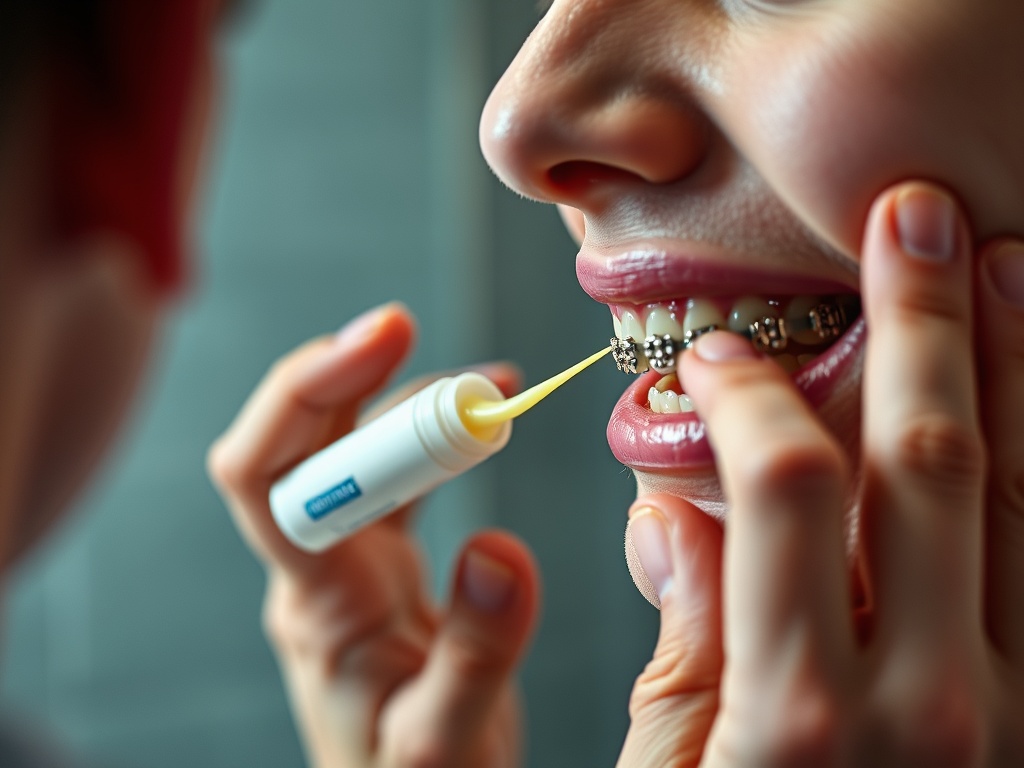
Foods that usually help and foods that often cause trouble
| Usually easier early on | Often risky or uncomfortable |
|---|---|
| Soft eggs, yogurt, oatmeal, pasta, rice, soups, tender fish | Popcorn, hard chips, nuts, ice |
| Soft fruit, bananas, applesauce | Whole apples or pears bitten from the front |
| Soft sandwiches cut into pieces | Bagels, crusty bread, hard pizza edges |
| Cooked vegetables | Raw carrots and hard crunchy vegetables |
| Soft proteins cut small | Sticky candy, caramel, chewing gum |
Mistakes to Avoid With Eat Comfortably Braces First Few Weeks
Biting with the front teeth too soon
Even if the food seems soft, front-biting into sandwiches, pizza crust, or fruit can stress sore teeth and brackets.
“Testing” hard foods because soreness is improving
Feeling better does not mean the brackets are ready for popcorn, nuts, or sticky candy.
Letting food sit around brackets all day
The ADA's oral health recommendations still apply. Braces create more surfaces where plaque can stay.
Ignoring a poking wire
Wax can help temporarily, but if a wire keeps catching or cutting tissue, the office should know.
If cost or coverage is part of your orthodontic planning, review our explainer on what Medicare dental coverage actually includes in 2026 before assuming braces are covered under a general dental benefit.
Planning Notes for Eat Comfortably Braces First Few Weeks
It is usually manageable on your own when soreness is symmetrical, gradually improving, and mostly tied to chewing. Mild cheek irritation and temporary difficulty finding a comfortable bite are also common early on.
Planning Notes for Eat Comfortably Braces First Few Weeks During Planning
Contact your dentist or orthodontist if:
- a bracket comes loose
- a wire is poking and wax is not enough
- you cannot close or chew because something feels mechanically wrong
- pain is severe, one-sided, or worsening after the first several days
- you notice swelling, pus, or signs of infection
- a sore area is getting larger instead of healing
A simple meal strategy for school or work days
Planning ahead helps more than willpower. Pack one breakfast option, one lunch option, and one snack option that you already know you can chew comfortably. That might mean oatmeal in the morning, a soft sandwich cut into pieces at lunch, and yogurt or a banana for a snack. Repeating easy wins for a week is better than improvising with crunchy convenience foods that irritate sore teeth or break brackets.
If the bite starts to feel off later in treatment, or treatment is stretching longer than expected, it can help to revisit how often a long-term treatment plan should be updated.
A smarter way to get through week one with braces
The first few weeks with braces are more about texture and mechanics than about hunger. Softer foods, smaller bites, patient pacing, and a few simple tools usually make the adjustment period much easier.
Try this before your next adjustment: make a 7-day braces menu before your next adjustment or appliance start date so comfort does not depend on last-minute food choices.
Clinical Checks for Eat Comfortably Braces First Few Weeks
For Eat Comfortably Braces First Few Weeks, this part of Clinical Checks for Eat Comfortably Braces First Few Weeks focuses on confirmed findings, measurements, imaging, and health-history factors while recovery expectations are clarified, with the same details verified before the next appointment is booked. The clinician should also explain what remains uncertain and whether another test or specialist opinion would alter the plan for Eat Comfortably Braces First Few Weeks after the examination is explained, using the examination and health history rather than a general assumption.
Who May Benefit From Eat Comfortably Braces First Few Weeks
For Eat Comfortably Braces First Few Weeks, the section on Who May Benefit From Eat Comfortably Braces First Few Weeks should address diagnosis, tissue health, medical history, goals, and ability to maintain the result before temporary care is replaced, with those details checked again during the initial review. The clinician should explain which risk factor would make another approach more predictable for Eat Comfortably Braces First Few Weeks before the final recommendation is accepted, connecting the recommendation to the examination and health history. A written summary helps the patient compare the next step for Eat Comfortably Braces First Few Weeks before temporary care is replaced, especially when follow-up responsibilities are confirmed during the initial review.